
Start with colour
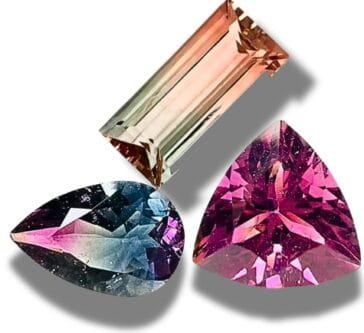
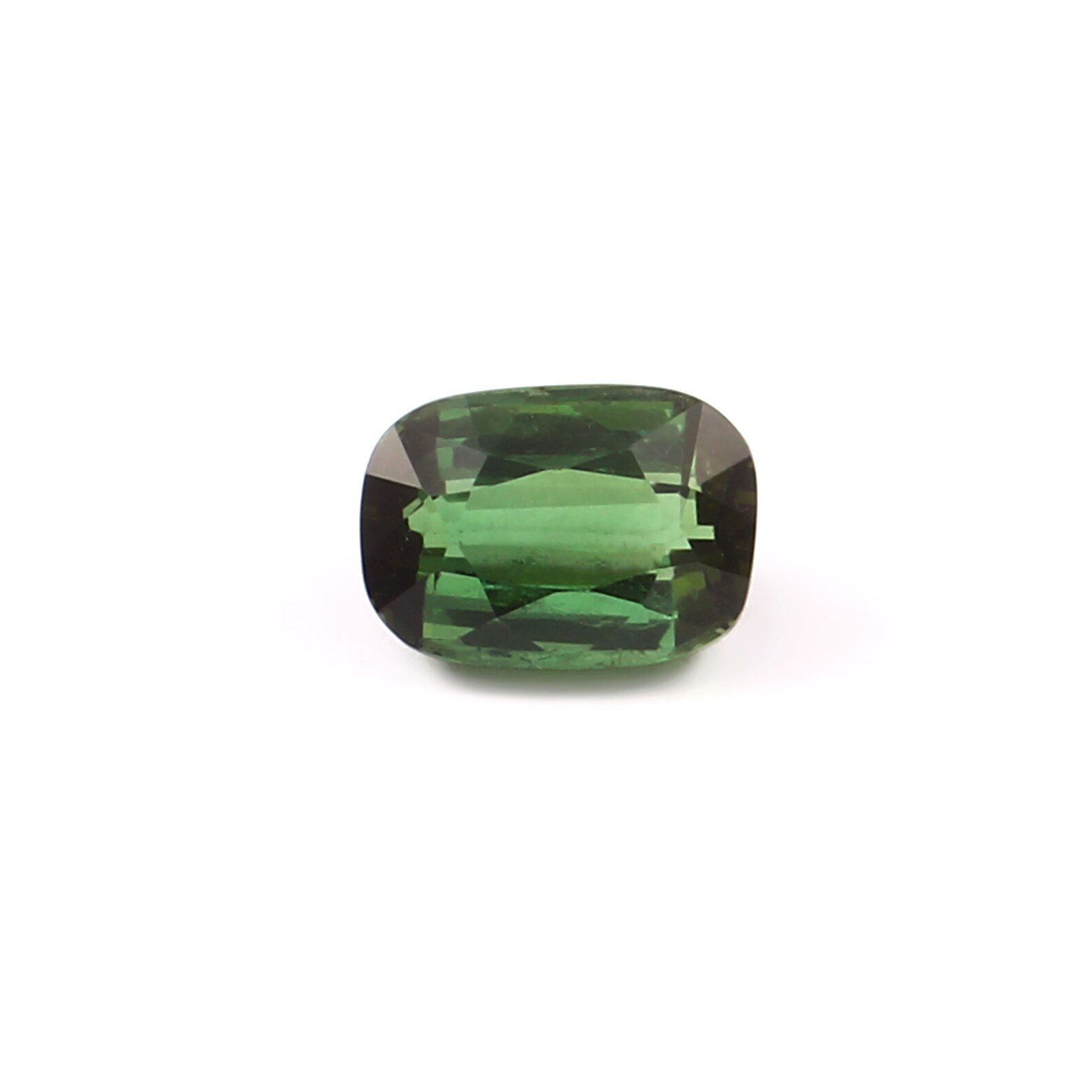
Colour is the biggest single driver of tourmaline value. Decide which family you want — green, pink, blue-green (Paraiba), bi-colour or watermelon — then within that family, prioritise vivid, even saturation over a pale or patchy stone of higher carat weight.
Check clarity honestly
Natural tourmaline commonly has some inclusions; the question is whether they’re visible to the naked eye and whether they affect brilliance. An eye-clean stone with minor inclusions under magnification is normal and not a defect.
Evaluate the cut, not just the carat
Tourmaline’s pleochroism means cutting orientation genuinely changes how vivid a stone looks face-up. A well-proportioned, well-oriented cut at a lower carat weight will often outperform a larger, poorly cut stone — check for good symmetry and minimal windowing (a washed-out centre).
Understand carat vs. size
Tourmaline’s density means a given carat weight can look slightly smaller than the same weight in a lighter gemstone. Always check the stated millimetre dimensions rather than judging size from carat weight alone.
Ask about treatment
Heat treatment to improve colour is common and widely accepted in the tourmaline trade — the key is disclosure. A reputable seller states clearly whether a stone is untreated or heat-treated, and should be able to answer directly if asked.
Confirm origin where it matters
For most tourmaline, origin is not a major value factor. The exception is Paraiba tourmaline, where Brazilian origin material commands a premium over African material of similar visual quality — origin should appear on the certificate for higher-value copper-bearing stones.
Get certification for higher-value stones
A lab report confirms species, discloses treatment, and records weight and measurements. It doesn’t replace judging colour and cut yourself, but it protects you against misrepresentation — always ask for one on a significant purchase.
Buy from a seller who discloses, not just sells
Whether buying online or in person, a trustworthy seller answers direct questions about treatment, origin and certification before you ask twice. Hayat Gems has cut and graded natural gemstones from our own workshop in Jaipur since 1975, and every certified stone we sell ships with a verifiable report.
Questions to ask before you buy
- Is this stone natural, and is it heat-treated or untreated?
- Does it come with a certificate, and can I verify the report number independently?
- What are the exact millimetre dimensions, not just the carat weight?
- Where was this stone mined, if that matters for this variety (e.g. Paraiba)?
Frequently Asked Questions
Rarer varieties like Paraiba tourmaline have shown strong demand and value retention, but any gemstone purchase should be made for the stone’s own merit and enjoyment first, not as a guaranteed financial investment.
Loose stones give you full control over the setting and are usually more cost-effective; finished jewelry is ready to wear immediately but limits your choice to existing designs. See our guide on buying loose gemstones for a custom ring for a full comparison.
Ring centre stones commonly range from around 1 to 5 carats depending on colour and budget, though this varies widely by design and personal preference.
Yes, provided the seller offers clear treatment disclosure, verifiable certification on higher-value stones, and accurate photos and measurements — ask questions before purchasing if anything is unclear.
Related Articles
Find Your Gemstone by Name
Match your name to a natural gemstone.
Green Tourmaline Guide
Meaning, colour, value & how to choose.
Find Your Gemstone by Name
Match your name to a natural gemstone.
Birthstones by Month
A complete guide to natural birthstones.