
A gemstone with more colour range than almost any other
Tourmaline forms in more colours than nearly any other gemstone species — green, pink, blue, yellow, and combinations of two or three colours in a single crystal. That variety alone makes it a favourite with jewellery designers: a client who wants a specific shade to match an outfit, a birthstone, or a personal preference has genuine options within one species, rather than having to switch gemstones entirely.
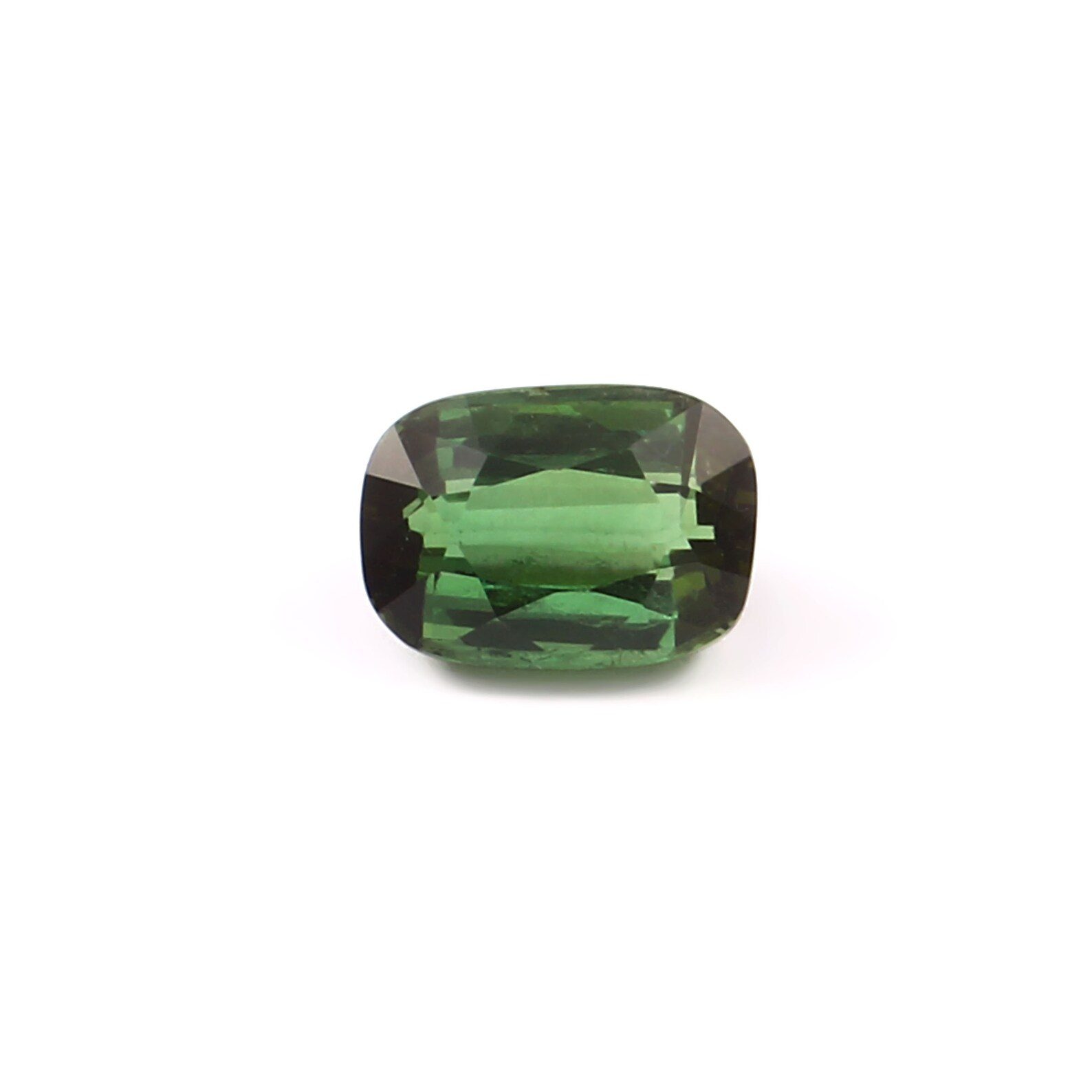
- Green tourmaline — the most classic and widely available shade, from soft mint to deep forest green.
- Pink and rubellite tourmaline — ranges from pale blush to vivid magenta-pink.
- Paraiba tourmaline — an intense neon blue-green, the rarest and most valuable variety.
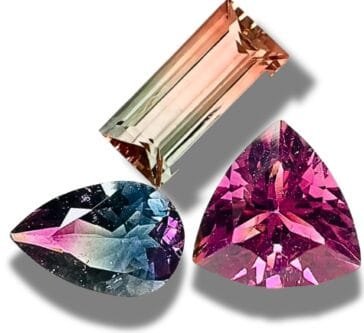
- Watermelon tourmaline — pink core with a green rim, prized specifically for its natural colour zoning.
- Bi-colour and tri-colour tourmaline — two or three distinct colours in one stone, no two alike.
Durable enough for everyday jewelry
At 7 to 7.5 on the Mohs hardness scale, tourmaline is hard enough for rings, earrings and bracelets worn regularly, though it should still be protected from hard knocks like any coloured gemstone. It takes a polish well and holds facet edges cleanly, which is part of why it performs so well in faceted cuts.
Genuine design versatility
Because tourmaline occurs in saturated colour and in colour combinations no other gemstone offers, it works equally well as a quiet, single-colour stone in a classic setting or as the centrepiece of a statement piece built around its natural colour zoning. Bi-colour and watermelon stones in particular are often set to showcase the colour break itself, rather than hiding it.
What to check when choosing a natural tourmaline
- Colour saturation: vivid, even colour outperforms a pale or patchy stone of the same carat weight.
- Clarity to the eye: tourmaline often has natural inclusions; what matters is whether they affect brilliance, not whether they exist at all.
- Cut orientation: tourmaline shows different colour intensity from different angles (pleochroism), so a well-oriented cut noticeably outperforms a poorly oriented one.
- Certification: ask for a lab report confirming species and disclosing any treatment, especially on higher-value stones.
Frequently Asked Questions
At 7–7.5 on the Mohs scale it holds up well to daily wear, though — like most coloured gemstones — it benefits from a protective setting and shouldn’t be knocked against hard surfaces.
Its neon blue-green colour comes from trace copper, and it’s significantly rarer and more expensive than green or pink tourmaline. We cover it in detail in our dedicated Paraiba tourmaline guide.
Yes — tourmaline is the modern October birthstone, alongside opal.
Some tourmaline is heat-treated to improve colour; this is a widely accepted, disclosed treatment. Ask for certification stating treatment status before buying a higher-value stone.
Related Articles
Green Tourmaline: Meaning, Color & Value
A full buying guide to green tourmaline.
Tourmaline Buying Guide
Colours, cuts & how to judge quality.
Find Your Gemstone by Name
Match your name to a natural gemstone.
Birthstones by Month
A complete guide to natural birthstones.